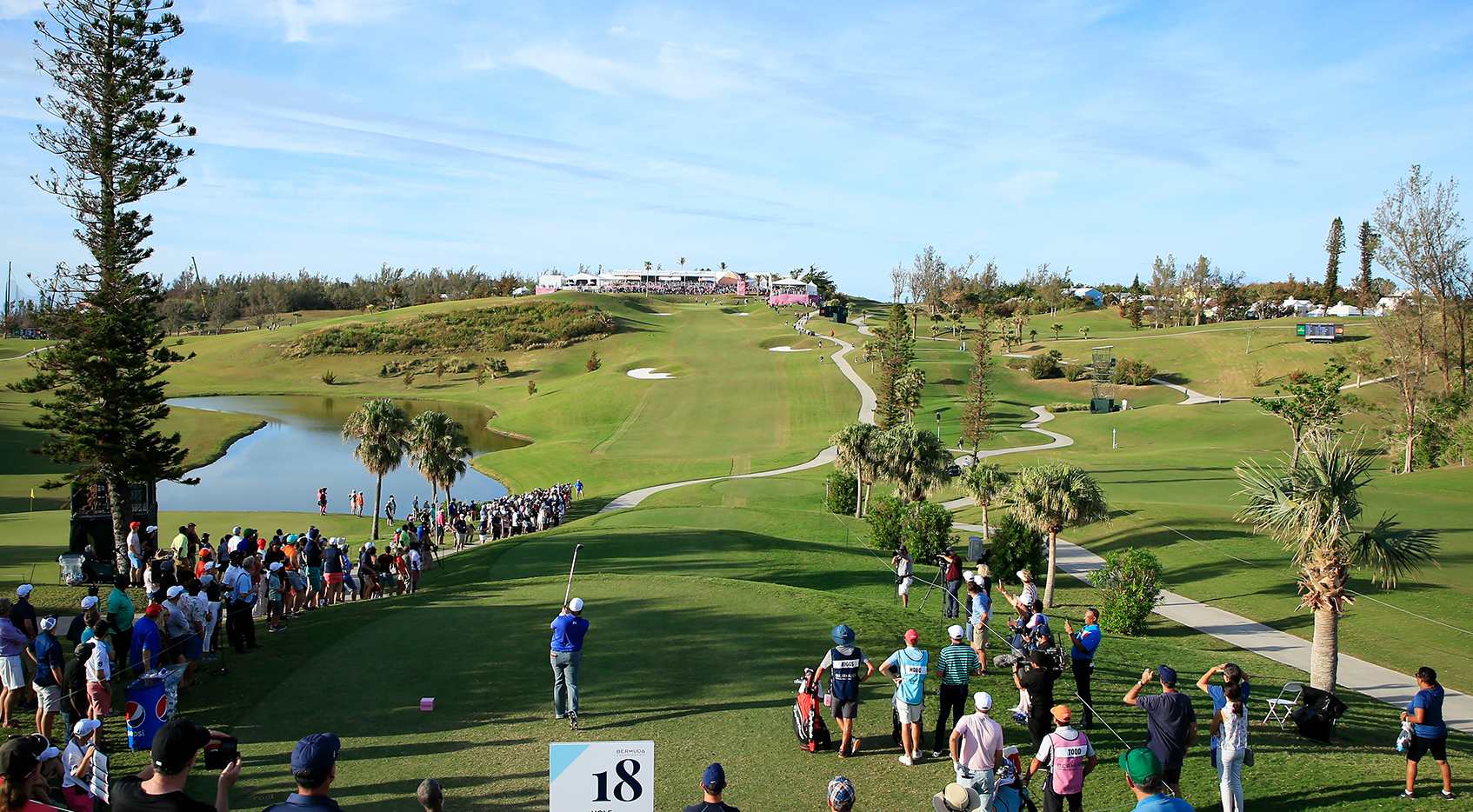
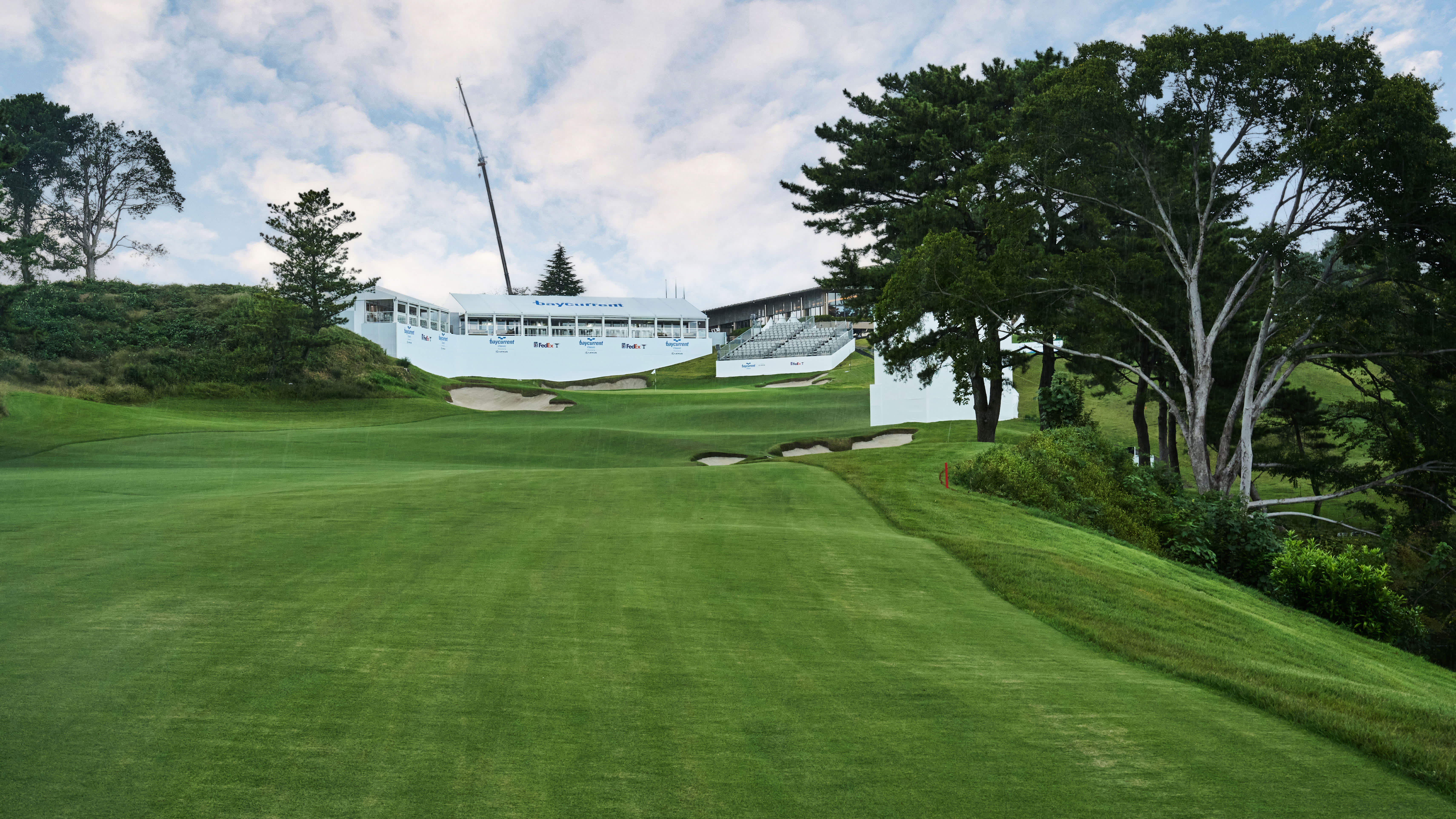
The Card
- Venue: Vanderbilt Legends Club - North Course
- Where: Franklin, Tennessee, USA
- Architect: Tom Kite, Bob Cupp
- Scorecard: Par 70, 7,197 yards
The Korn Ferry Tour returns to Franklin for the Simmons Bank Open for the Snedeker Foundation on September 10, 2026, with 147 players in the field. Fairway and green surfaces, green sizes and water counts are not on record for this venue, so the card is what it is.
The read: A par 70 at 7,197 yards is not long by modern standards, and with a full 147-player field the winning number should sit deep in red figures.
What Kind Of Test This Is
Nothing here is severe. Driving accuracy at 67.4% ranks among the easiest fairway-finding tests on record (164th hardest of 192 courses measured), and greens in regulation at 73.7% is easier still (174th of 190). Players find the short grass and they find the putting surface.
The scoring metrics follow. Bogey-or-worse rate of 14.5% is below average, ranking 141st hardest of 190, while birdie-or-better at 21.4% sits near the middle of the pack at 110th. That combination describes a course that does not punish, rather than one that showers birdies on everyone.
The caveat matters: these figures are averaged over 2024-2025 and rest on only two runnings. Two tournaments is a thin base, so treat the percentiles as a sketch rather than a settled profile. The middling marks for scrambling (56.9%), the penalty for missing the fairway (0.34) and the penalty for missing the green (0.72) all reinforce the same idea, which is that mistakes here are recoverable.
The read: This is a birdie-hunt where the field stays out of trouble, so target players who convert rather than players who survive.
The Holes
The par mix is heavy on par 4s: 12 of them, alongside four par 3s and two par 5s. Those par 4s stretch from 357 to 508 yards, with six of them measuring between 360 and 450 yards. The average par 4 comes in at 431 yards, the average par 3 at 198 and the two par 5s at a hefty 613.
The closing hole is the toughest on the property, a 504-yard par 4 that played 0.209 over par. Behind it sit the 225-yard 12th at 0.125 over and the 508-yard 7th at 0.093 over. The pattern is clear enough: length is what creates difficulty here, and the long par 4s and the long par 3 are where the damage is done.
At the other end, the 590-yard 14th gave up 0.448 shots to par, comfortably the softest hole on the card. The short par 4s follow, with the 388-yard 10th at 0.239 under and the 395-yard 17th at 0.234 under. The scoring stretch and the grind stretch are separated almost entirely by yardage.
The read: Long hitters get the par 5s and the wedge holes without being exposed on the closing stretch, which tilts the card toward distance.
Where Strokes Are Won And Lost
No stat correlations have been recorded on any version of this course, so there is no measured figure for what the venue rewards against a typical event. That is a real gap, and it means the case has to be built from the difficulty metrics rather than from a skill-by-skill signal. Read what follows as inference, not measurement.
Off the tee, the accuracy numbers argue that finding the fairway is close to a given. A 67.4% driving accuracy rate that ranks among the easiest on tour, paired with a fairway-miss penalty of 0.34 that sits right at tour average, means crooked drivers are not being separated from straight ones by much. With the par 4s averaging 431 yards and two par 5s averaging 613, the incentive runs toward distance.
Approach play is where the picture gets interesting. Greens in regulation at 73.7% is one of the easiest marks on record, which sounds like a green light, but the flip side is that hitting greens does not distinguish anybody. The birdie-or-better rate of 21.4% is only average, so the field is finding surfaces without converting at an unusual clip, which points at proximity and putting as the actual separators.
Around the green, scrambling at 56.9% and a missed-green penalty of 0.72 both land near the middle. Short game is not being taxed and it is not being rewarded much either. Given how few greens get missed here, the volume of short game work available to any one player is limited.
The read: With approach and short game flattened by an easy course, the putter is the most plausible differentiator, and distance is the tiebreaker on the long par 4s.
Courses It Resembles
The closest measured match is Sea Island GC (Plantation) at 93.3% similar, a par 72 at 6,907 yards, followed by the Seaside Course at Sea Island (90.0% similar, par 70 and 7,005 yards). TPC Deere Run comes in at 89.2% similar (par 71, 7,327 yards), with Trinity Forest at 87.7% (par 71, 7,380 yards) and Robert Trent Jones GC at 87.5% (par 71, 7,385 yards).
The common thread is not architecture but scoring environment. Most of the comparable venues play to a lower par than a standard 72 and none stretch much beyond 7,400 yards, and all of them are places where the winning score goes deep and the field bunches. Deere Run in particular is the archetype for a shortish setup where a hot putter beats a long driver.
The read: Form from Deere Run and the Sea Island courses is the most useful history to lean on, and it favours accurate scorers over bombers who need a course to bare its teeth.
What It Took To Win
Two runnings, two very low numbers. Zach Bauchou won at 23 under in 2025, a year after Paul Peterson took it at 20 under in 2024. Strokes gained breakdowns are not on record for either champion, so there is no way to say which department carried them.
What the two scores do establish is the bar. Both winners needed to average roughly three shots under par a day across four rounds, which is consistent with everything the difficulty percentiles say about a course that does not fight back. A player who makes pars cleanly and waits for the field to come back will not be in the mix here.
The read: Price in a winning score around 20 under or better, and back the players in the field with the steepest birdie rates rather than the steadiest ball strikers.